


Why Playwright Fits Enterprises Best in 2025
ByPratik Patel
Sep 16, 2025
Modern, scalable Playwright boosts reliability and CI velocity for enterprises in 2025, see how it outperforms legacy stacks.

At Starwest 2024, Mr. Anand Gopalakrishnan delivered an insightful presentation titled “AI-Assisted Exploratory Testing for Healthcare Software Based on the STEEEP Domain of Healthcare Quality.” He highlighted how artificial intelligence is revolutionizing exploratory testing by enabling real-time risk assessment and providing deeper insights into software performance.
This innovative approach not only streamlines the testing process but also ensures that healthcare applications meet the STEEEP standards—Safe, Timely, Effective, Efficient, Equitable, and Patient-Centered. By using AI, healthcare software may become more resilient, secure, and ultimately capable of providing optimal patient results.
Also, Alphabin stands at the forefront of this transformation, using AI and automation healthcare testing to significantly enhance healthcare software quality. Explore how this advanced approach is reshaping the future of healthcare software testing and covering the way for better patient care.
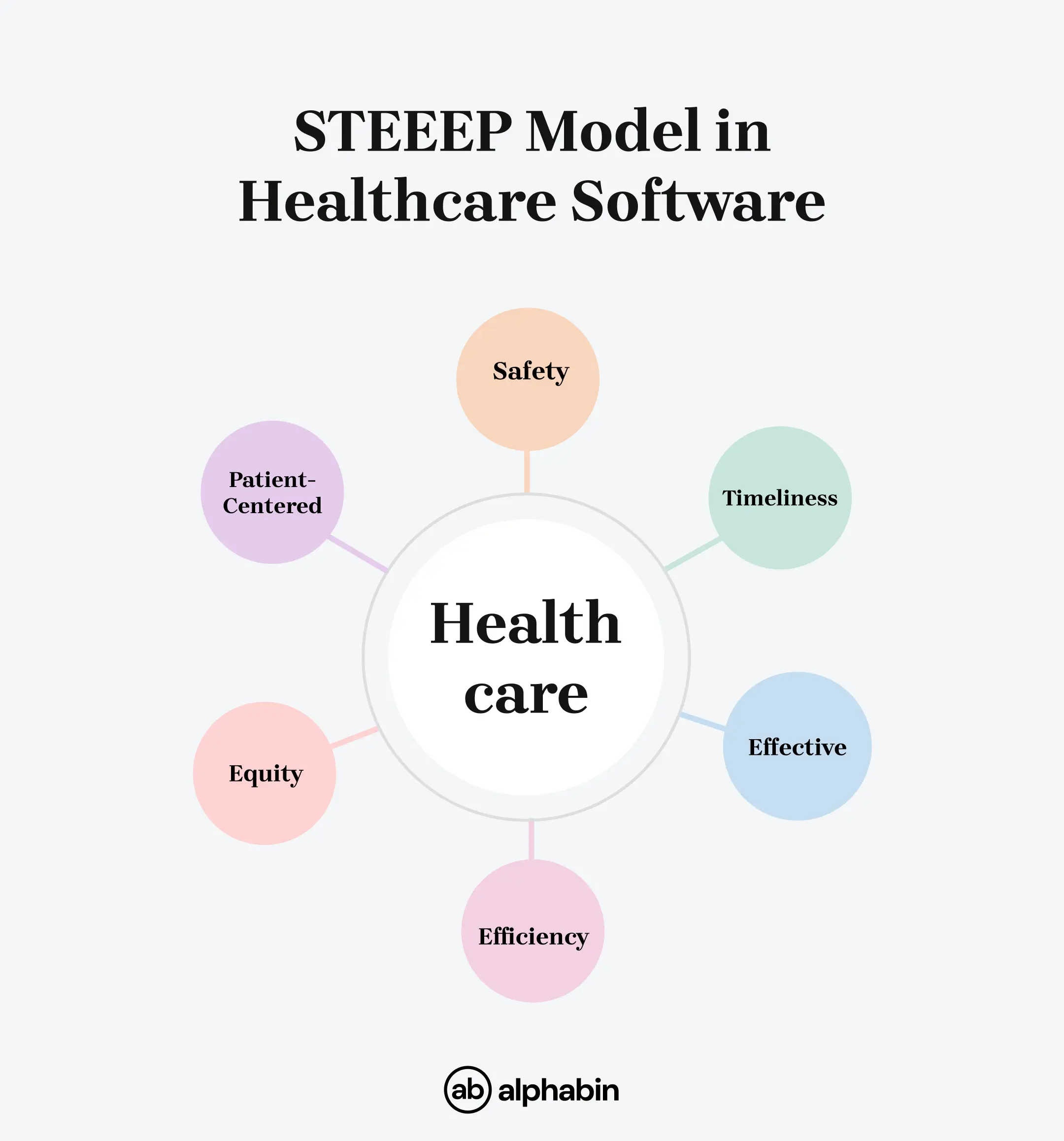
The STEEEP model is a framework for quality improvement in healthcare. It is developed based on practical guidelines from the Institute of Medicine (IOM) and is centered around six essential goals for quality patient care. STEEEP stands for Safety, Timeliness, Effective, Efficiency, Equitable, Patient-Centered and each letter represents a specific focus area:
Having expertise in healthcare automation, Alphabin delivers high-quality, reliable software supporting the STEEEP model. We keep healthcare software safe, efficient, and responsive to patient needs by automating key testing processes.
Exploratory testing is a method based on a free-minded approach, and the tester makes a decision on how to use the application, which resembles real-world scenarios.
We need to see that AI also plays an important role in improving exploratory testing. The use of AI can have possibilities for mimicking various test situations, specifying possible issue areas, and marking abnormal patterns that might refer to unknown issues.
As per research global AI in healthcare market size was valued at USD 20.9 billion in 2024 and is estimated to reach USD 148.4 billion by 2029, registering a CAGR of 48.1% during the forecast period. AI offers several advanced capabilities that are particularly useful in healthcare software exploratory testing:
Traditional exploratory testing faces multiple challenges in the complex and highly regulated healthcare software environment.
It is a fact that healthcare software is much more difficult because of regulatory constraints as well as patients’ data protection requirements along with terms and conditions like HIPAA and FDA Rules. These factors pose distinctive difficulties that require robust ways of establishing safety, precision, and speed.
Traditional manual exploratory testing in healthcare has several limitations:
By speeding up, making more accurate and adaptable, AI helps transform exploratory testing in healthcare software. Using machine learning, AI analyzes through large data sets, finds the optimal test strategies, and learns from each test to better test next time. It runs parallel to real user behavior, goes with testing on the go and continually improves the process for higher success rates. Healthcare software remains this flexible in order to meet high standards, at least efficiently for the complexity the sector poses in the healthcare environment.
Enhanced Accuracy and Speed
AI testing streamlines ordinary tasks like data entry, giving testers more time to focus on critical software functions. It efficiently detects complex issues, including security and performance problems, and runs daily tests to ensure software updates meet the fast-evolving needs of healthcare.
Dynamic Test Case Creation
Another important aspect of the usage of AI in testing is the capability of the system to generate new test cases dynamically. When the AI tool is in use, it also learns what areas are vulnerable and performs the testing in those regions. This is particularly applicable in serving healthcare needs since software can be designed to face different test scenarios so that all possible test cases are tested for software quality assurance and safety.
Revolutionizing healthcare software, AI-assisted exploratory testing is both improving safety and enhancing efficiency in patient-centered care. It deals with vital quality elements, providing secure and inclusive software options for a variety of healthcare needs.
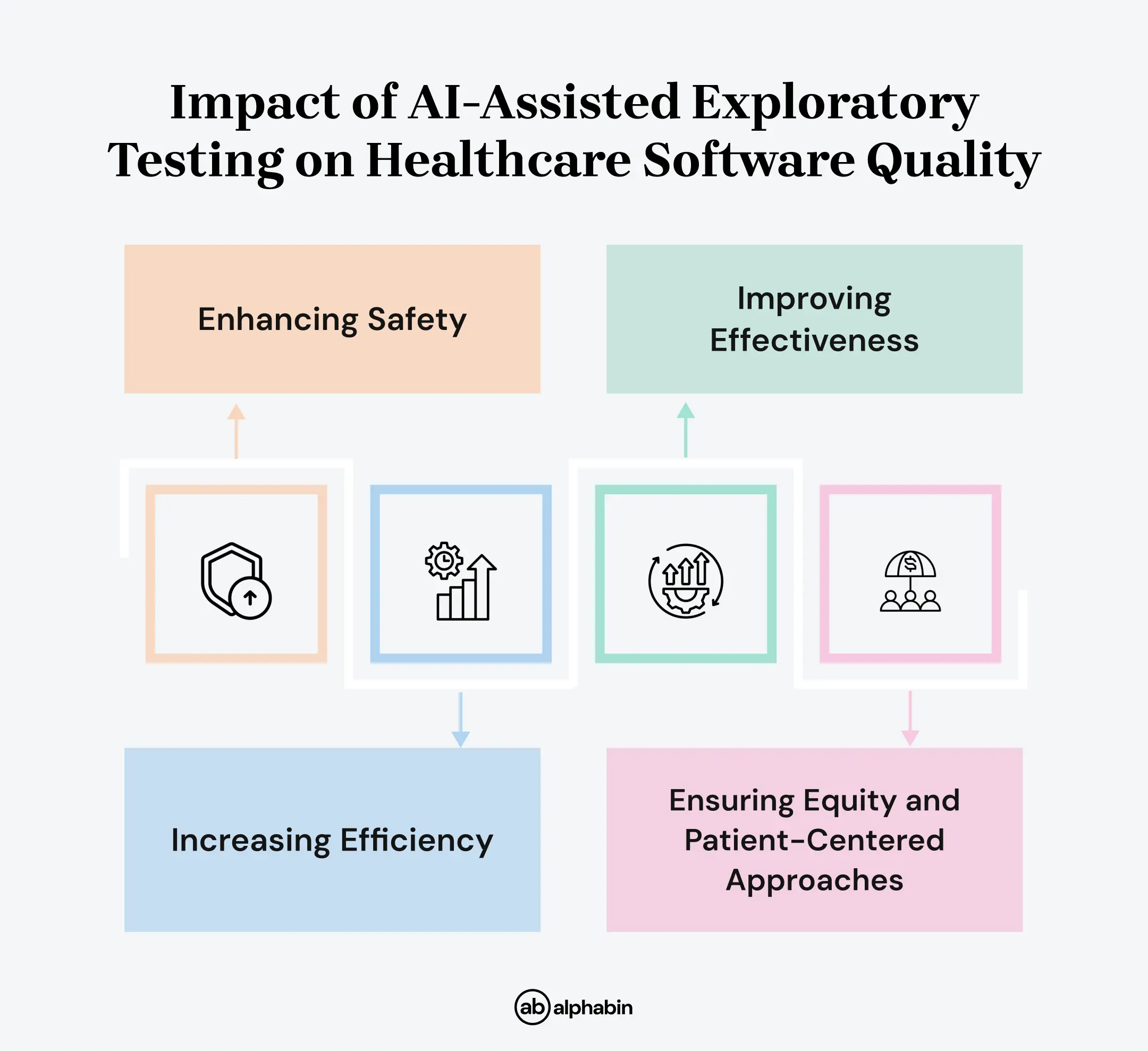
Enhancing Safety
Software safety gains a great advantage from AI-assisted testing by finding bugs and vulnerabilities early in the development phase. Due to its advanced algorithms, it can identify risks that manual testing does not pick up on, making sure that healthcare software conforms to tough regulatory compliance standards and works accurately in important environments.
Increasing Efficiency
AI simplifies the exploratory testing workflow by performing repetitive tasks so that human testers can concentrate on more difficult matters. The efficiency reduces both testing time and resources, which quickens the release of software and conserves high quality standards. AI continues to learn and adapt in order to facilitate testing for software updates that occur on an ongoing basis.
Improving Effectiveness
The analysis of testing grows with AI that covers the full software, along with its elaborate workflows and information exchanges. It supplies detailed insights based on data that assure a complete assessment of all functions with respect to their accuracy and performance.
Ensuring Equity and Patient-Centered Approaches
AI helps software solutions to be developed in a way that accommodates the variation in patients’ needs. AI in this case focuses on the near interaction behaviors and patterns and allows for the development of applications that are inclusive of users from all backgrounds and allow for user-centered design balanced with equal access to care for the patients.
Exploratory testing is of great importance to healthcare software and is centered on the functionality of software products, protection of patients, assessment of the effectiveness of testing, and compliance with all regulatory compliance.
In today’s digital era, the future of healthcare software testing is extending rapidly, especially with the integration of AI-driven methodologies. With this advanced technology, healthcare systems require more secure and efficient software solutions. High-quality software becomes critical because healthcare software directly impacts patient results, data security, and operational efficiency.
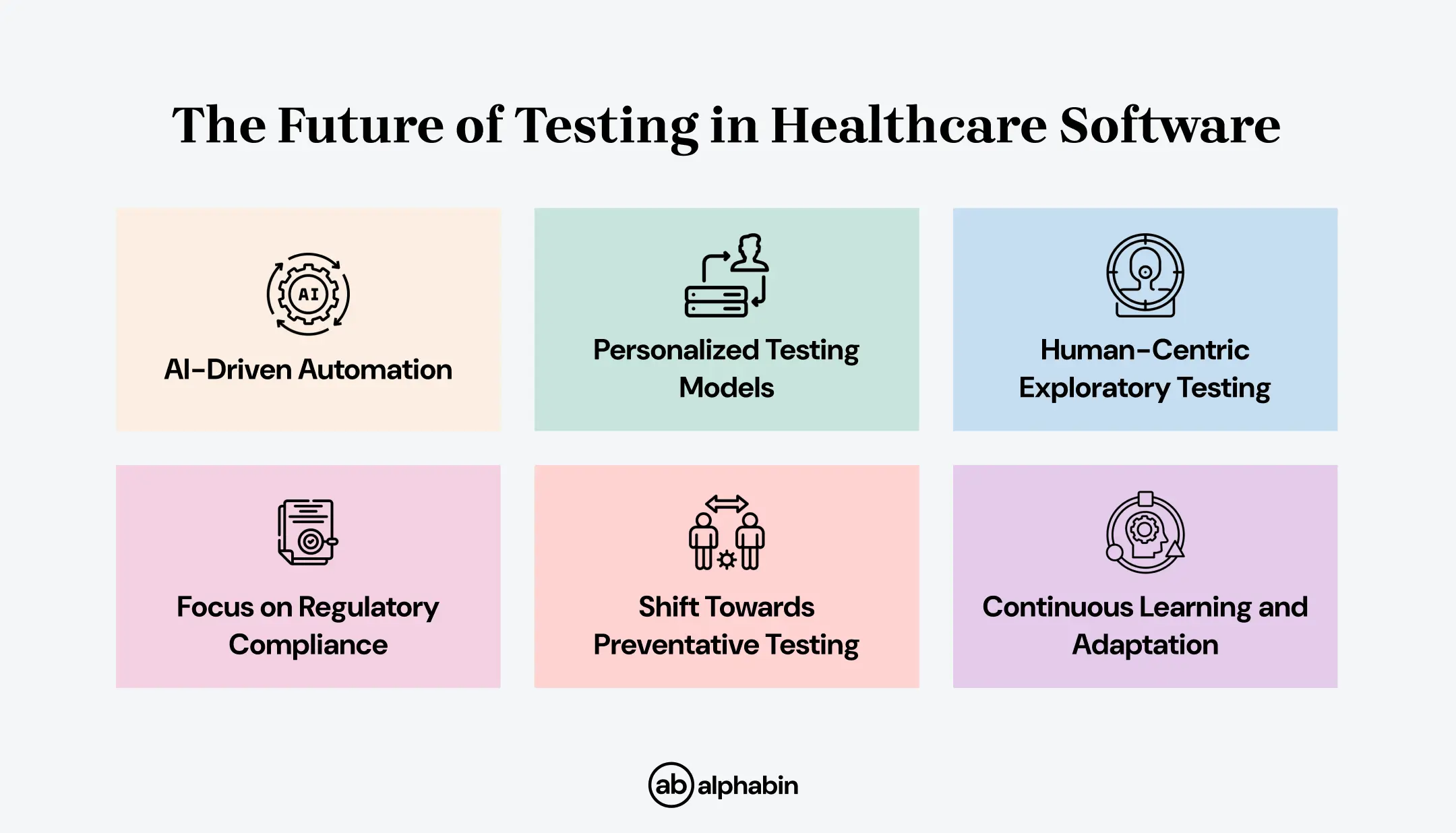
Exploratory testing that uses AI in healthcare software quality is changing the way bugs are identified, the usability of the software, and addressing elaborate needs of end consumers. With AI integration, it makes the healthcare applications safeguarded and more secure to implement, in dealing with patients, highly compliant with and adhere to legal acts, including HIPAA. This makes exploratory testing faster and requires fewer resources, thus enabling the fitting of quality software that enhances the efficient care of the patients.
Alphabin provides AI-based testing services exclusively for healthcare application testing. Their platform simplifies complex testing capabilities, making sure that compliance procedures are followed to provide healthcare givers with an effective, safe, and easy-to-use application.

Founder and CEO
Pratik Patel is the founder and CEO of Alphabin, an AI-powered Software Testing company. He has over 10 years of experience in building automation testing teams and leading complex projects, and has worked with startups and Fortune 500 companies to improve QA processes. At Alphabin, Pratik leads a team that uses AI to revolutionize testing in various industries, including Healthcare, PropTech, E-commerce, Fintech, and Blockchain.
ByPratik Patel
Sep 16, 2025
Modern, scalable Playwright boosts reliability and CI velocity for enterprises in 2025, see how it outperforms legacy stacks.

ByPratik Patel
Jul 12, 2025
Learn how to select the best test automation service with our 10-point evaluation framework. Ensure high-quality, efficient testing for your projects.

ByPratik Patel
Apr 22, 2025
TestGenX is an AI-native test automation tool designed to help QA teams automate testing at the speed of modern development. With no-code test creation, AI-driven maintenance, and parallel execution, it ensures fast, reliable tests for AI-powered applications.